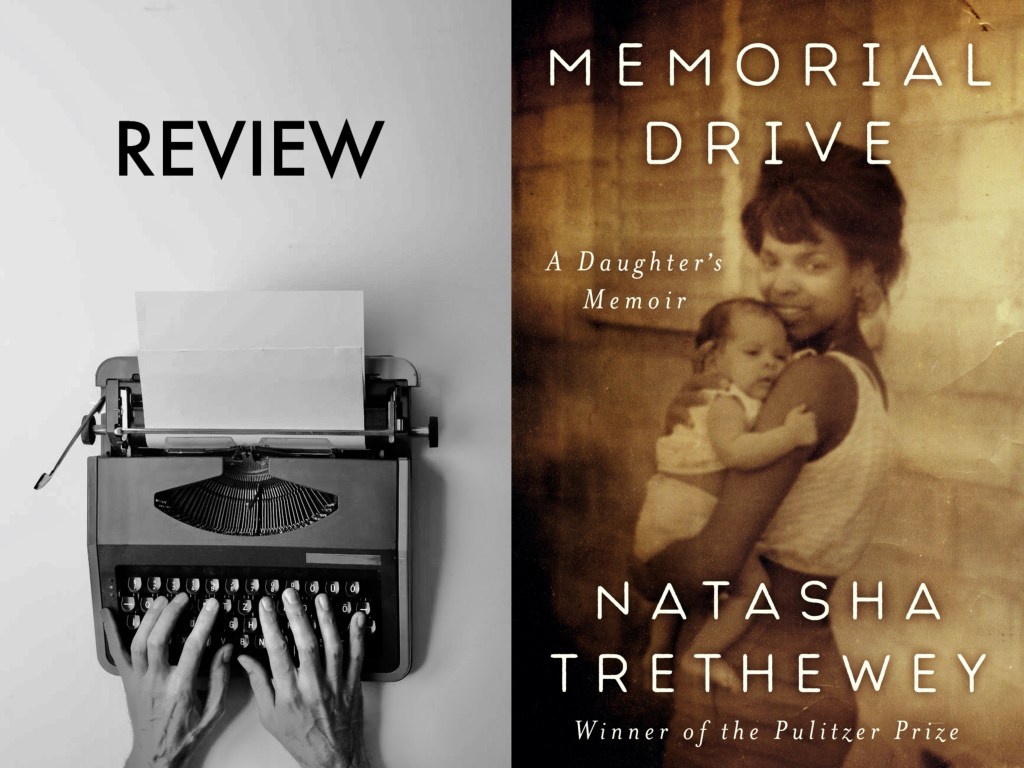
Description from the publisher: “At age nineteen, Natasha Trethewey had her world turned upside down when her former stepfather shot and killed her mother. Grieving and still new to adulthood, she confronted the twin pulls of life and death in the aftermath of unimaginable trauma and now explores the way this experience lastingly shaped the artist she became. With penetrating insight and a searing voice that moves from the wrenching to the elegiac, Pulitzer Prize–winning poet Natasha Trethewey explores this profound experience of pain, loss, and grief as an entry point into understanding the tragic course of her mother’s life and the way her own life has been shaped by a legacy of fierce love and resilience. Moving through her mother’s history in the deeply segregated South and through her own girlhood as a “child of miscegenation” in Mississippi, Trethewey plumbs her sense of dislocation and displacement in the lead-up to the harrowing crime that took place on Memorial Drive in Atlanta in 1985. Memorial Drive is a compelling and searching look at a shared human experience of sudden loss and absence but also a piercing glimpse at the enduring ripple effects of white racism and domestic abuse. Animated by unforgettable prose and inflected by a poet’s attention to language, this is a luminous, urgent, and visceral memoir from one of our most important contemporary writers and thinkers.”
Review of Memorial Drive by Natasha Trethewey
This was a beautiful and moving memoir, and honestly, nothing I write will effectively describe just how perfect this book is. I was initially hesitant to read this book given the difficult subject matter, but once I started reading I could barely put it down. The narrative moves quickly and is completely absorbing. The book flows through the author’s memories from her life with her mother – starting with a happy early childhood, moving through her parent’s divorce and mother’s remarriage, and ending with her mother’s murder and the eventual process she goes through – nearly thirty years later – to reconcile with the trauma.
As I was reading this book, I couldn’t help but reflect on memory and the ways that we construct narratives around the memories that stick with us (and the impact of those we try to forget and push away). Memories have a way of becoming correlated and interconnected: our brains tie our memories together and attempt to make meaning from those connections, drawing conclusions about “cause and effect” in our lives and leading us to believe that certain events in our lives have “set us down a path”. One of my favorite passages from the book is about forgetting (or trying to forget):
OF COURSE, WE’RE MADE UP OF WHAT WE’VE FORGOTTEN TOO, WHAT WE’VE TRIED TO BURY OR SUPPRESS. SOME FORGETTING IS NECESSARY AND THE MIND WORKS TO SHIELD US FROM THINGS THAT ARE TOO PAINFUL; EVEN SO, SOME ASPECT OF TRAUMA LIVES ON IN THE BODY, FROM WHICH IS CAN REEMERGE UNEXPECTEDLY. EVEN WHEN I WAS TRYING TO BURY THE PAST, THERE WERE MOMENTS FROM THOSE LOST YEARS THAT KEPT COMING BACK, RISING TO MIND UNBIDDEN. THOSE MEMORIES – SOME INTRUSIVE, SOME LOVELY – SEEM NOW TO HAVE A GRANDER SIGNIFICANCE, LIKE SIGNPOSTS ON A PATH. IT’S A PATH I CAN SEE NOW ONLY BECAUSE I HAVE FOLLOWED IT BACKWARD, ATTEMPTING TO FIND A MOMENT OF REVELATION, EVIDENCE OF SOMETHING BEING SET IN MOTION.”
NATASHA TRETHEWEY, MEMORIAL DRIVE
The books covers so much, given its short length (it comes in at 212 pages). We move around in time between the warmth, comfort, and happiness of an early childhood spent living next door to supportive extended family; to experiences of the blatant racism of the south in the 1970s and 80s; to moving away from family and the trauma of witnessing ongoing abuse (the “lost years”, as she called them).
The two chapters that were the most difficult to read were those that shared the evidence from her mother’s case file: her last words written as testimony against her abuser (which she never got to deliver), and the transcripts from the recorded phone calls with her abuser (following his release from a psychiatric hospital) that occurred in the days before her death. Although these were painful passages to read, her mother’s spirit, intelligence, and strength shined through. This was a woman who was fighting back. These chapters makes her death particularly painful (as though it could be any other way…).
There is one chapter in the book when Trethewey transitions to writing in the second person because it’s too painful to own (in first person) the experiences she’s describing. This is the chapter when she starts to recall her own awareness of the abuse she and her mother were suffering. In this chapter, she has overheard her mother being hit by her stepfather, and she confronts her mother about it. Later that night, she overhears her mother tell her stepfather that “Tasha knows”, as though pleading for the abuse to stop because it’s starting to impact her daughter. Of that incident, she writes,
YOU ARE ASHAMED AND YOU DON’T KNOW WHY. THE NEED IN THE VOICE OF YOUR POWERFUL, LOVELY MOTHER IS TEACHING YOU SOMETHING ABOUT THE WORLD OF MEN AND WOMEN, OF DOMINANCE AND SUBMISSION. YOU HEAR IT EMANATE FROM THE MOST INTIMATE OF SPACES, THE BEDROOM WITH ITS MARRIAGE BED. YOUR SHAME AND YOUR SADNESS ARE DOUBLED. YOU HEAR IN YOUR MOTHER’S WORDS A PLEA TO GET HIM TO STOP. YOU HEAR HER DESPERATE HOPE THAT HIS KNOWING YOU KNOW, KNOWING YOU LISTEN, WILL PUT AN END TO THE ABUSE. AS IF THE FACT THAT YOU ARE A CHILD, THAT YOU ARE ONLY IN THE FIFTH GRADE, WILL CHANGE ANYTHING AT ALL. AND NOW YOU KNOW THAT THERE IS NOTHING YOU CAN DO.
YOU KNOW YOU KNOW YOU KNOW.
LOOK AT YOU. EVEN NOW YOU THINK YOU CAN WRITE YOURSELF AWAY FROM THAT GIRL YOU WERE, DISTANCE YOURSELF IN THE SECOND PERSON, AS IF YOU WEREN’T THE ONE TO WHOM ANY OF THIS HAPPENED.
NATASHA TRETHEWEY, MEMORIAL DRIVE
Ultimately, the book is about how trauma, and our interpretations of trauma, shape us. It’s about reconciling the different “selves” that we carry around. We make meaning out of the things that shape us – we catalogue the events of lives, and through that process we both create and embody the story we tell ourselves about who we are. We grow, we change, we evolve – and we revisit and reframe our past. But in the end, our experiences are our own, and we can only move forward once we’ve owned and reconciled our past with our present.

